This Earth Day, bring your children outside
This Earth Day, bring your children outside
By Erin Reilly, Executive Director
April is Earth month. And there's no denying people are changing their behaviors here on our Philly-shaped slice of planet Earth. Gardeners are doing extra watering, anticipating drought. Joggers were out in force on a record-setting 84-degree day on April 1. In the Delaware Valley, sheltering in your basement during a tornado warning is now a thing.
Businesses are shifting too: the Phillies held their earliest opening day ever. Poconos ski resorts invested heavily in snow guns to powder slopes Mother Nature formerly blanketed herself. PECO provides heating and cooling assistance to households hard hit by changing temperatures.
These stories illustrate the remarkable resilience of humans in times of change. We adapt!
Of course, there is a difference between adapting to change and being protected from harm. Adjusting your jogging schedule, stocking up on allergy medicine, these are acts of personal resilience, and they serve us well. What personal acts cannot do is keep industrial chemicals out of a watershed, or protect the air downwind of factory smokestacks.
Resilience is a virtue. It is not a substitute for regulation, especially now, when a serious threat is coming to the water and air near you: pollution.
As a child of the 80s, I've never known a life without pollution protections enforced by my federal government. Now, for the first time in half a century, Americans' air is no longer fully shielded.
Those protections were quietly canceled within the last year. Furthermore, the Supreme Court narrowed water protections and the EPA is working to further loosen them. As a result, expect pollution to increase substantially. What was once a bedrock guarantee of clean water from our taps, and breathable air in our lungs, has been removed while our attention was elsewhere.
Pollution laws date back to the 1970s and prior. They aim to limit harmful emissions and chemical discharges, requiring industry to bear the major costs of reducing pollution. When industry is no longer required to pay for the pollution it adds to our shared air and water, the costs don't disappear. They shift: from the smokestack and tailpipe directly into your family's healthcare bills, into the pediatrician's office, into the lungs of your children and parents. Somebody always pays the bill. Right now, executive orders have been written so that somebody is you.
All hope is not lost. Americans have stared down hard environmental challenges before and won. The recovery of the ozone layer is a concrete example from recent history. When citizens identify a problem, agree on the stakes, and work together, we solve it. One obvious solution is to ask our state and local governments to step in and regulate, since the feds have effectively quit the job. The science of pollution is not in doubt. What is needed is the collective will to act.
That action is already happening across our region. Nature centers, grassroots groups, and everyday families are stepping forward — organizing river cleanup days, tree planting, and sitting with children to explain where water comes from and how a healthy forest filters the air we breathe. Our colleagues at Bartram's Garden, Briarbush, POBS, Awbury, Stroud, Overbrook EEC, and the Schuylkill Center — together with Riverbend Environmental Education Center’s programs in Philly and suburban schools — are training children to take their rightful places in an interconnected web of neighbors, teachers, and advocates already doing the work.
Just as air and water don't abide by boundary lines, our collective power can flow freely across city borders. If millions of people can find one another online to rally around a trend, they can certainly unite to protect clean air and clean water.
We need not wait for visionary leaders. We need to point our leaders in the right direction through our clubs and Park Friends groups, through comments at Council meetings, and through our votes.
Pollution will touch everyone you love. Attend a town or county meeting with a friend and speak during public comment. Call your state legislators. If they don't hear from us, they de-prioritize this topic. Join a neighborhood green team. Share local environmental news.
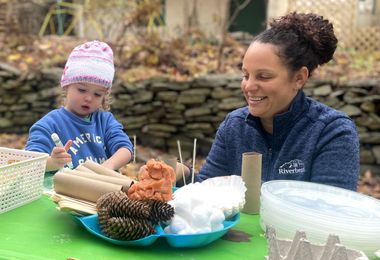
Above all, bring the children in your life outside. Let them wade in a creek, turn over a log, watch a hawk ride a thermal. Take them to a local nature center. Most centers are free. People protect what they love, and children who fall in love with the natural world will spend their lives defending it. That is how we build a wave no elected leader can ignore.